


Best 2 Part Epoxy Garage Floor Coating
- JT Thomas
- 1 day ago
- 6 min read
If you have been shopping for the best 2 part epoxy garage floor coating, you have probably already noticed a problem - everybody claims theirs is the toughest, thickest, or longest-lasting. That sounds good in an ad. It does not help much when you are trying to figure out what will actually hold up under hot tires, dropped tools, moisture, and real use.
Here is the plain truth. There is no single magic bucket that wins every time. The best system depends on the condition of your concrete, how the garage is used, how much abuse the floor takes, and whether the coating is being installed by a pro or rolled on as a weekend project. Chemistry matters, but prep matters just as much. In a lot of failed floors, the product gets blamed when the real issue was bad surface preparation or a watered-down system sold with good marketing.
What makes the best 2 part epoxy garage floor coating?
A true 2 part epoxy uses a resin and a hardener that are mixed together before installation. Once combined, the material starts a chemical cure instead of just drying from air exposure. That is a big part of why epoxy can create a harder, more chemical-resistant surface than single-component paint-style coatings.
But not all 2 part epoxies are equal. Some are high-solids industrial products designed to build film thickness and bond aggressively to properly prepared concrete. Others are lower-solids consumer-grade kits that are easier to apply but leave a thinner coating behind. Both may say epoxy on the label. They are not playing in the same league.
If you want the floor to last, look at solids content, abrasion resistance, bond strength, and whether the system includes a real primer, body coat, and protective topcoat. A floor coating is not just one layer. It is a system. When somebody sells you a one-coat shortcut and promises commercial performance, that is usually where the trouble starts.
Why many garage coatings fail early
Most coating failures are predictable. Concrete is porous, often contaminated, and rarely ready for coating straight off the shelf. Oil residue, old sealers, moisture vapor, weak surface cream, and hairline cracking all affect adhesion. If that slab is not mechanically prepared, the coating is trying to stick to dirt, laitance, or previous contamination instead of sound concrete.
This is why acid etching and basic cleaning are often oversold. They may make the floor look ready, but they do not reliably create the same profile as professional diamond grinding. On a garage floor that sees vehicle traffic, that difference matters.
The second issue is thin material. Some low-cost kits stretch coverage by reducing solids. That makes them easier to roll, cheaper to package, and more forgiving for inexperienced users. It also means less actual epoxy remains on the floor after cure. Thin films wear faster, show tire pickup sooner, and do a poor job of hiding concrete imperfections.
Then there is unrealistic cure time marketing. Fast turnaround sounds convenient, but speed and long-term performance are not always aligned. Some polyaspartic and polyurea systems have real advantages, especially as topcoats, but they are not automatically better simply because they cure fast. In the wrong hands, a very fast material can create just as many problems as a slow one.
Best 2 part epoxy garage floor coating vs DIY kits
This is where a lot of homeowners get tripped up. They compare a store-bought kit to a professionally installed floor and assume the difference is mostly labor. It usually is not. The material package itself is often completely different.
A typical DIY kit is made to be approachable. Longer working time, lower odor, thinner application, and simpler instructions all make sense for a retail product. The trade-off is performance. Many of these kits are fine for light-duty spaces or short-term cosmetic improvement, but they are not the benchmark for a high-use garage.
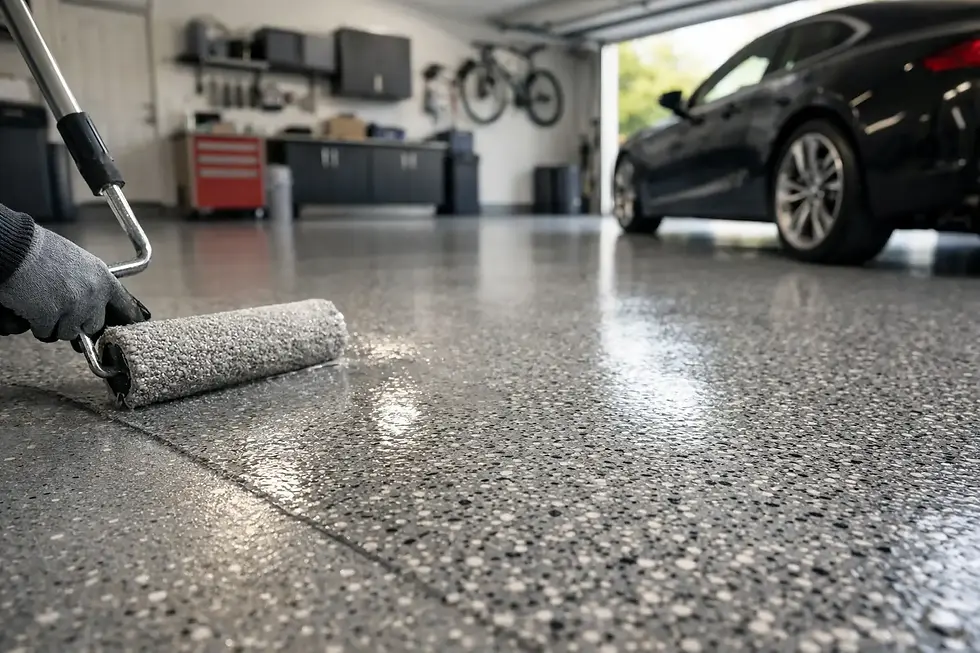
A professional-grade 2 part epoxy system usually starts with mechanical surface prep, crack and pit repair, a higher-build epoxy base, decorative broadcast if desired, and a topcoat chosen for wear and UV conditions. That combination gives you better adhesion, more thickness, better impact resistance, and a more uniform finish.
That does not mean every contractor-installed floor is good. Plenty of crews cut corners, rush prep, or substitute lower-end materials while charging premium prices. The point is simple: do not compare all epoxies as if they are the same just because they come in two parts.
What to look for before you buy
The first thing to ask is how the concrete will be prepared. If the answer is pressure washing, acid washing, or a quick scrub and roll, you should be cautious. Mechanical grinding is the standard for a reason. It opens the surface, removes weak material, and gives the coating something real to bite into.
Next, ask what percentage solids the epoxy is and how thick the installed system will be. Higher solids generally mean more material stays on the floor after cure. That usually translates to a tougher coating, though application conditions and system design still matter.
You also want to know whether the floor will get a topcoat. Epoxy has excellent bond strength and build, but many systems benefit from a urethane or polyaspartic topcoat for added scratch resistance, chemical resistance, and UV stability. If your garage door stays open often or the floor sees a lot of sun, that topcoat matters even more.
Finally, ask how moisture is being addressed. Concrete can hold and transmit moisture long after it looks dry. On some slabs, especially older ones or those without a proper vapor barrier, moisture testing is not optional. A strong coating on a wet slab is still a failed floor waiting to happen.
The right system depends on how you use your garage
If your garage is mostly for parking and storage, a solid high-build epoxy with a durable topcoat is often the sweet spot. It gives you the thickness and adhesion people want from epoxy without treating the floor like a showroom only.
If the space doubles as a workshop, impact resistance and stain resistance become more important. That is where coating thickness, repair quality, and topcoat selection start to matter more than color choice or decorative flakes.
If you want a bright decorative finish that hides dust and minor imperfections, a full flake broadcast over a 2 part epoxy base is usually a smarter option than a thin solid-color roll-on. It is more forgiving visually and tends to age better in active garages.
For commercial or heavier-use settings, the best answer may be a hybrid system rather than epoxy alone. Epoxy is often the backbone because of its bond and build, but other materials may be layered in for faster return to service or better UV resistance. That is why anyone giving a one-size-fits-all answer is usually selling, not advising.
How to spot sales talk from real expertise
Be careful with phrases like military-grade, industrial-strength, or lifetime coating if there is no real explanation behind them. Good installers can tell you what the product is, why they use it, how they prep for it, and where it does or does not make sense. Bad ones lean on buzzwords.
A contractor worth trusting should be able to explain failure points in plain English. They should talk about adhesion, profiling, moisture, cure windows, recoat timing, and topcoat purpose without sounding like they are reading from a brochure.
That kind of conversation matters because coating work is unforgiving. Once the material cures, mistakes are expensive. At Epoxy Pros 217, we have seen too many floors sold on appearance alone, only to peel because the prep was weak or the chemistry was mismatched to the slab.
So what is the best choice?
The best 2 part epoxy garage floor coating is usually a professional-grade, high-solids epoxy system installed over mechanically prepared concrete and protected with the right topcoat for the space. That is not the flashiest answer, but it is the honest one.
If you are comparing options, stop looking for the loudest claim on the label and start looking at the full system. Ask how the slab will be prepped. Ask what the actual material is. Ask how thick it goes down and what protects it after cure. A garage floor has to do more than look good on day one.
A good floor coating should make your garage easier to live with, easier to clean, and tougher for the long haul. If the installer can explain exactly how they get you there, you are probably talking to the right kind of pro.

Comments